
Call now
977 01 4518759
Send Message
collegereaders123@gmail.com
Our Location
Putalisadak, Kathmandu
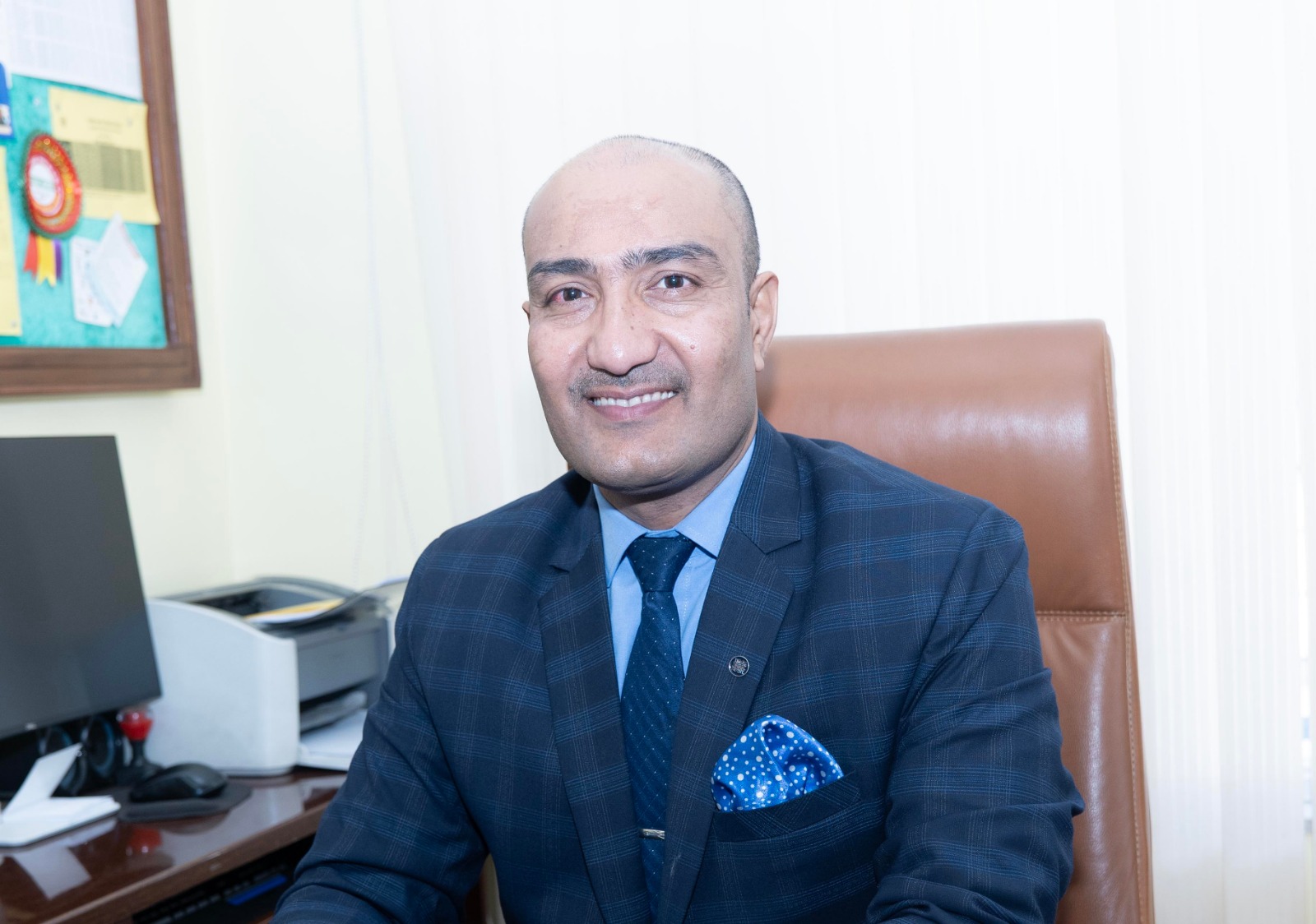
Manoj Acharya
Founder Principal
Kathmandu Global School
A teacher implements the plan; a principal creates the vision and leads it
- College Readers
- 30 Mar 2026
- Views
- Interviews
Manoj Acharya, Founder Principal of Kathmandu Global School, has spent nearly two decades in Kathmandu’s school education sector. Originally from Tanahun, he entered education immediately after completing his SLC, when an unexpected teaching opportunity opened the door to what later became his life’s work. Over the years, he grew from classroom teacher to school leader, guided by experience, responsibility, and a strong belief that education must remain relevant to time, society, and the needs of children. In this conversation with College Readers, Acharya reflects on his journey into education, the challenge of global comparison, the changing expectations of parents and students, and the need to build schools that are student-centered, transparent, and context-sensitive.
You have experienced both roles—as a teacher and now as a principal. How do you see the difference between them, especially in relation to students?
At one level, there is not a huge difference, because in both roles the core responsibility is the same: responsibility toward the child. A teacher is directly accountable to students and parents. A principal is also accountable to students. So both positions are rooted in service to the learner.
But there is also a major difference. A teacher mainly implements the school’s plans. A principal, however, must create the vision, shape the plan, coordinate different aspects of the school, and guide the institution toward holistic development. In that sense, the role of a principal is broader. A teacher carries out the system; a principal must build and lead it.
As a school leader, what do you see as the major challenge in today’s changing educational environment?
The biggest challenge today, in my view, is comparison. Parents, students, teachers, and society are constantly comparing our schools with what they see abroad. They ask: “Education is like this in the international market—why is ours not like that?”
The issue is not that comparison is wrong in itself. The issue is that those foreign systems reached where they are after long-term investment, policy support, social readiness, and sustained effort. They are at the peak of a process, while we are still at the base. Yet we suddenly see that peak and want the same results immediately.
That creates confusion and pressure because our schools do not yet have all the matching conditions—whether in management, parental readiness, student preparation, community support, or government policy. There is comparison, but there is not yet a full ecosystem to support the same outcomes. That is why this challenge affects curriculum, manpower, leadership, resources, and expectations at every level.
If schools in Nepal were given more thoughtful autonomy within a sound policy framework, many could do very creative work. But comparison without context has become a serious obstacle.
Parents’ expectations and students’ expectations are both very high today. In such a situation, what should be the role of parents, teachers, and school management?
The school cannot do everything alone. Parents also have an important role, and the relationship between school and home must be open and constructive. It is not only that the school knows everything and everyone must simply follow it. Many parents have the awareness and ability to understand what kind of education their children need, and schools should listen to their constructive feedback.
Parents should spend time with their children, discuss what they learned at school, what challenges they faced, and how they are growing. They also need to change with time. Sometimes we expect the school to change and we expect children to change, but some parents do not think that they themselves need to change.
Students, too, must understand that every school has its own culture, system, and process. Once a school has clearly explained its policy and approach, students learn best when they work within that system. If someone joins one school but expects it to function exactly like another, then conflict begins.
We often hear about progressive education, value education, skills, technology, and behavior change. How do you see these being integrated in school education?
I think many misunderstandings exist around the word progressive. Some people think a school becomes progressive simply by importing international programs. I do not agree with that. To me, bringing in a program from outside is not automatically progress; it can simply become copy-paste.
Being progressive means being willing to change meaningfully with time. If an old method no longer serves today’s learners, then we must improve it. If education was once teacher-centered, then we should move toward student-centered learning. If homework alone is no longer enough, then assignments, projects, and active engagement must come in.
Technology is important, but even before modern technology, our education had indigenous and vocational forms of knowledge. We once taught agriculture, practical work, and local skills. Those were also valuable. So my view is that we must learn from the world, but apply according to our own resources, culture, and environment. In other words: think globally, act locally.
How does Kathmandu Global School maintain quality in classroom teaching and learning?
At Kathmandu Global School, we clearly follow the curriculum prescribed by the government. We work within the CDC framework. But the important question is: once the objectives are defined, how creatively can a school go beyond the textbook to achieve them?
That is where our classroom approach matters. For instance, if students must improve in listening, speaking, reading, and writing, we do not rely only on the course book. We ask students to read novels across the year, engage in book reviews, do projects, and take part in creative work. The syllabus remains the same, but the path toward achieving the objective becomes richer and more meaningful.
So our principle is simple: we do not move away from curriculum objectives, but we work creatively within them.
What makes learning more student-centered, enjoyable, and effective at Kathmandu Global School?
Three things are essential: adequate infrastructure, thoughtful policy, and capable teachers. A school does not need unnecessary excess, but it must have what children truly need. Management must create sound policies, and teachers must be trained to turn those policies into engaging classroom practice.
At Kathmandu Global, we have worked on all three. We have the required infrastructure, a clear management approach, and a trained teaching team. We also place great emphasis on transparency with parents. One of our key practices is to keep parents informed about the child—attendance, homework, concerns, progress—because the parent and the teacher ultimately share the same goal: the child’s future.
Another major principle for us is security. Before learning can happen, a child must feel physically, mentally, socially, and emotionally secure. Only then does real learning begin. After that, discipline matters—not discipline in the narrow sense of silence, but discipline as meaningful involvement within a healthy system.
And I always say this: when a child enters the school gate, they should feel happy to be coming to school. If a school can create that feeling, it has already done something right.
Finally, what message would you like to give to parents?
My message to parents is this: when selecting a school, do not rely only on image or reputation. Study the school’s location, infrastructure, environment, management, policy, and programs for the child’s holistic development. Once you are convinced about these things, then build a genuine partnership with the school.
And for the parents who are already with us, I would say: we are committed to working sincerely for the well-being of children, but no school can do that alone. We need constructive feedback, open communication, and cooperation. Our goal is not just the future of one child, but the future of all the children connected with us.
Kathmandu Global School also believes that a school should not only serve its own students, but should create a wider positive impact in national education. That is the direction in which we continue to work.
Popular Categories
Trending This Month








 Established in 2065 BS, COLLEGE READERS is a premier national-level educational magazine dedicated to serving the academic and informational needs of school and university students, teachers, educators, and concerned ones in Nepal. The magazine provides current and comprehensive information on various educational opportunities worldwide, aiming to guide school and college-level students in their academic and career journeys. It also highlights essential support services and service providers that play a crucial role in shaping students' career paths in today's competitive world.

- Our Location Putalisadak, Kathmandu
- Send Us Email collegereaders123@gmail.com
- Call Us Now 977 01 4518759
