
Call now
977 01 4518759
Send Message
collegereaders123@gmail.com
Our Location
Putalisadak, Kathmandu
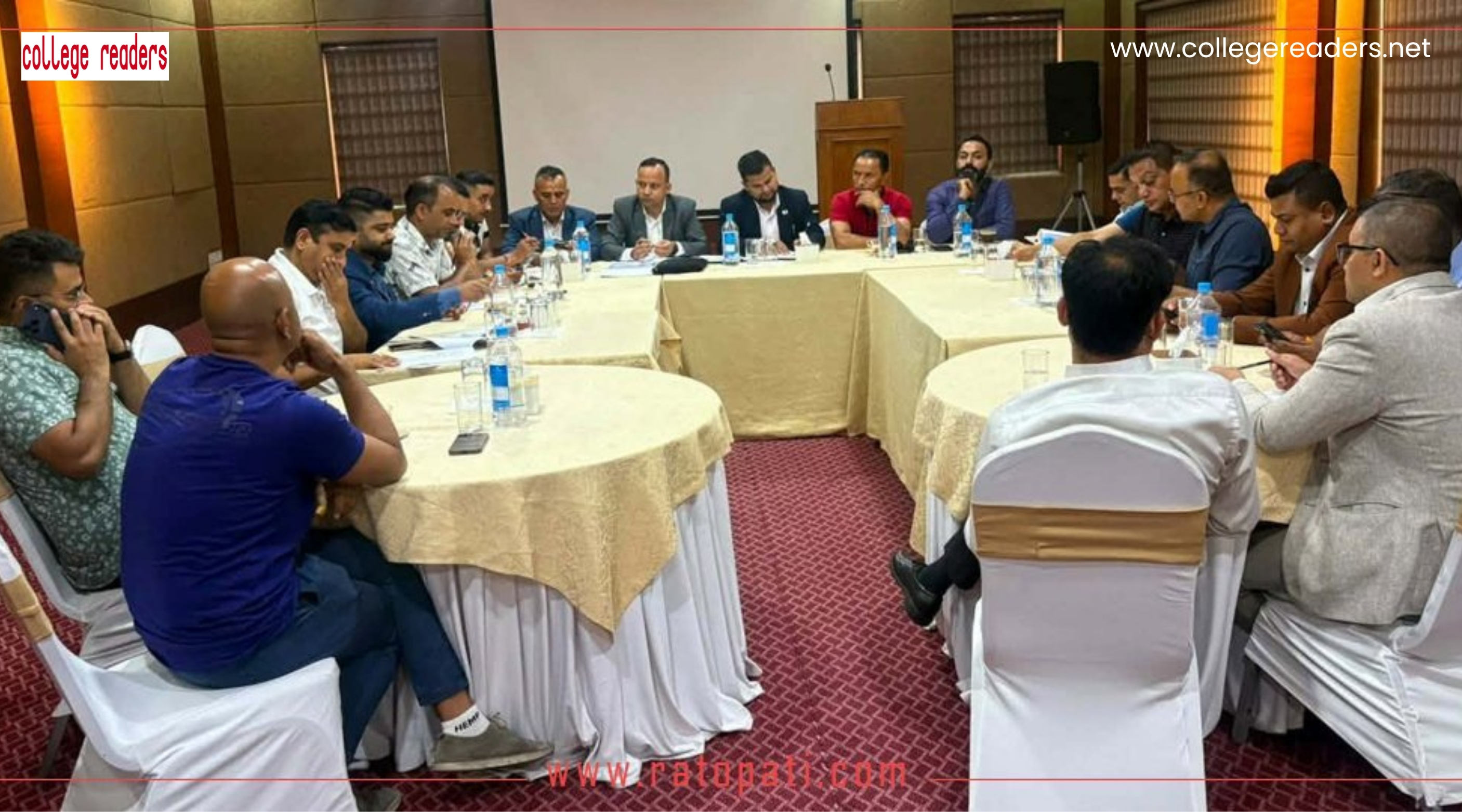
Education Consultancies Reject New Regulation, Warn of Nationwide Protest
- College Readers
- 13 Jul 2026
- Views
- News
Kathmandu — Educational consultancy organisations have strongly opposed the recently enforced Educational Consultancy, Language Teaching and Preparatory Classes (Operation and Management) Regulation, 2083, warning that its disputed provisions could seriously affect private investment, employment, entrepreneurship and the future of students seeking educational guidance.
At a joint press conference held in Kathmandu on Sunday, representatives of the consultancy sector accused the government of introducing the regulation without adequate consultation with the institutions directly affected by it. They announced that a nationwide protest movement would be launched if their concerns were not addressed promptly.
Industry representatives have particularly objected to the regulation’s security deposit requirement, describing it as neither reasonable nor scientifically justified. They argued that requiring consultancy firms to deposit a large amount of money would not automatically ensure student protection or improve the quality of services.
Instead, they said, the provision could force independently operated and self-employed consultancy businesses out of the market while discouraging new entrepreneurs from entering the sector.
The organisations have proposed that the government replace the deposit requirement with a more practical protection mechanism, including appropriate insurance coverage, effective regulatory monitoring and a reliable compensation system for students affected by malpractice or institutional failure.
They also criticised the administrative arrangements introduced under the regulation, saying they would create unnecessary control, duplicate procedures and additional financial obligations rather than making service delivery more efficient.
According to the organisations, the regulation is inconsistent with Nepal’s federal structure and administrative practices. They said the failure to clearly define the respective jurisdictions of federal, provincial and local governments could compel the same consultancy institution to complete similar registration, approval and reporting procedures before multiple authorities.
Such overlapping requirements, they argued, would increase bureaucratic complications, operational costs and uncertainty within the sector.
The consultancy associations also described the government’s failure to hold formal and meaningful discussions with stakeholders during the policy-drafting stage as a major weakness in the regulation-making process. They maintained that rules governing an entire industry should not be introduced without analysing their practical consequences and consulting the people and institutions responsible for implementing them.
The organisations announced a series of phased protest programmes if the government does not revise the disputed provisions.
As part of the campaign, they plan to launch a nationwide signature drive demanding amendments to the regulation. They will also consult legal experts and initiate administrative and judicial proceedings to challenge provisions they consider unjustified or legally problematic.
The associations further plan to intensify policy advocacy in collaboration with representative bodies of the private sector, including the Federation of Nepalese Chambers of Commerce and Industry.
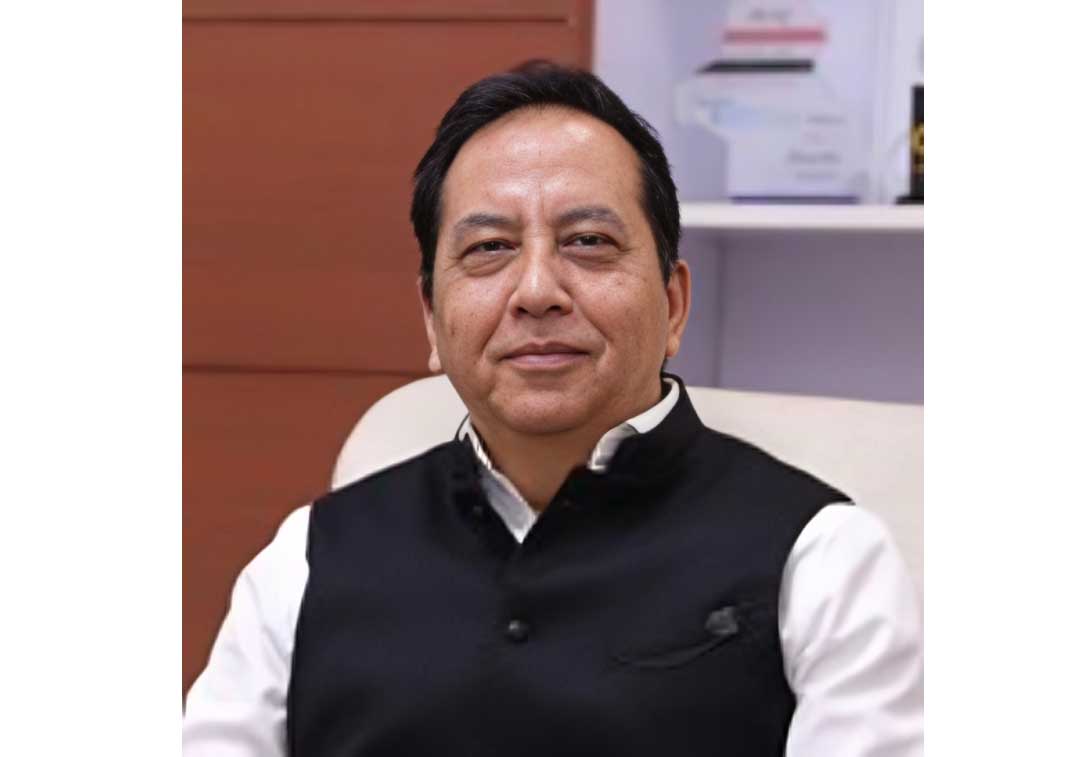
Raj Kumar Dhakal, a long-serving professional in the educational consultancy sector, warned that the protests could ultimately lead to the closure of consultancy offices across the country.
“If our demands are not addressed, educational consultancy institutions throughout Nepal will suspend their services, hand over their keys and locks to the government, and take to the streets,” Dhakal said.
He added, however, that the consultancy sector remained open to meaningful dialogue and a constructive resolution of the dispute.
“Our doors are always open for serious discussions with the government and for finding a practical solution,” he said.
The protest decision was jointly endorsed by the Federation of Educational Consultancy Entrepreneurs Nepal, Educational Consultancy Association of Nepal, Free Educational Consultancy Organization Nepal, Japanese Language School Association of Nepal, Educational Professional Consultancy Association of Nepal, Korean Educational Consultancy Association of Nepal, Active Educational Consultancy Association of Nepal, Association of Australian Education Representatives in Nepal, International Education Representatives Initiative of Nepal, Nepalese Association of Australian Education Representatives, National Educational Consultancy Association, Nepal Educational Business Association, and the Nepal Educational Counselling Services Association, among other organisations.
The associations have called on the government to immediately open formal negotiations and revise the regulation through consultation with relevant stakeholders. They said they supported effective regulation, accountability and student protection, but insisted that such objectives should be pursued through practical, transparent and proportionate measures rather than provisions that could weaken legitimate businesses.
The dispute is expected to intensify unless the government responds to the sector’s demands and clarifies how the regulation will be implemented across Nepal’s three levels of government.


Popular Categories
Trending This Month








 Established in 2065 BS, COLLEGE READERS is a premier national-level educational magazine dedicated to serving the academic and informational needs of school and university students, teachers, educators, and concerned ones in Nepal. The magazine provides current and comprehensive information on various educational opportunities worldwide, aiming to guide school and college-level students in their academic and career journeys. It also highlights essential support services and service providers that play a crucial role in shaping students' career paths in today's competitive world.

- Our Location Putalisadak, Kathmandu
- Send Us Email collegereaders123@gmail.com
- Call Us Now 977 01 4518759
