
Call now
977 01 4518759
Send Message
collegereaders123@gmail.com
Our Location
Putalisadak, Kathmandu
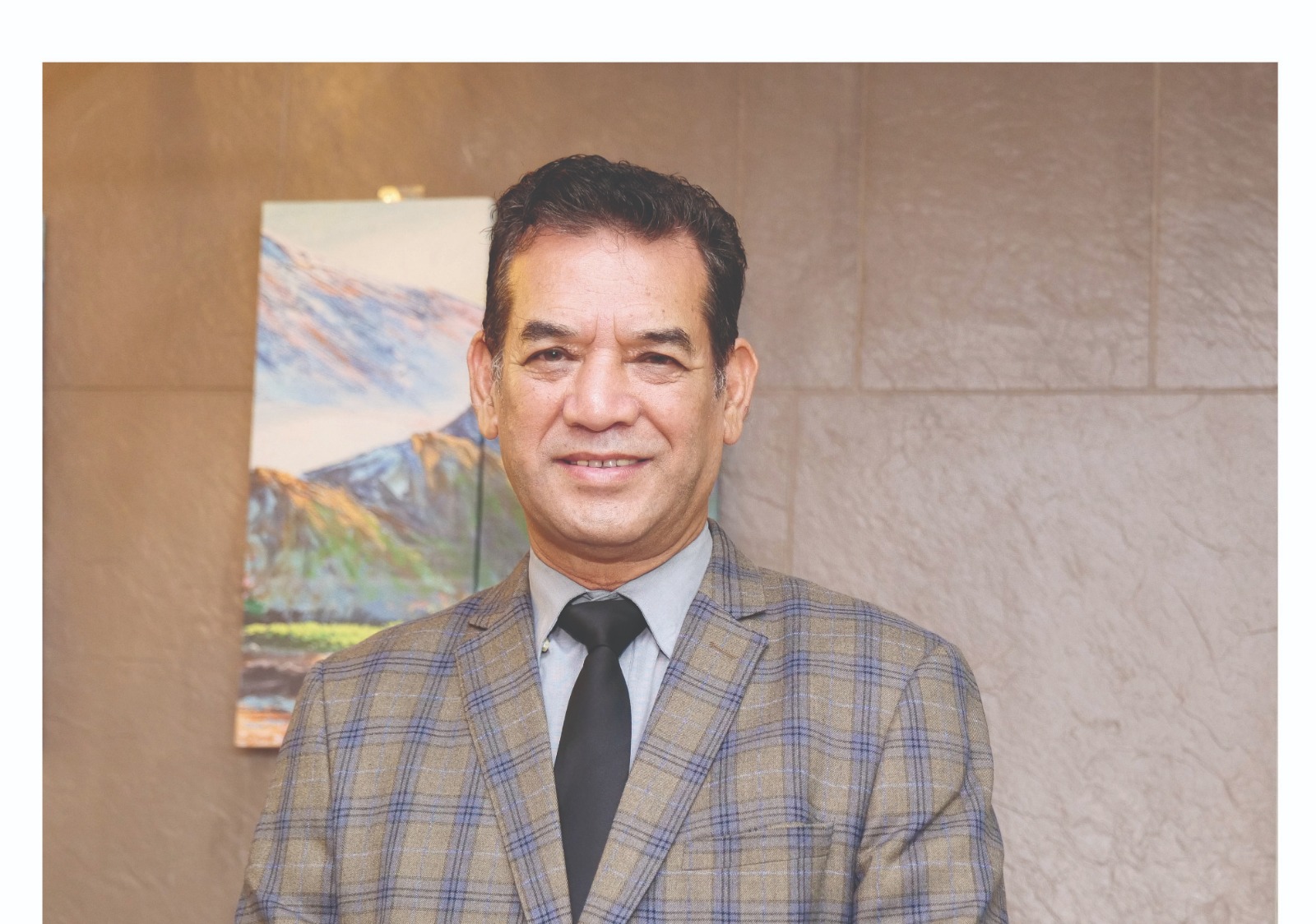
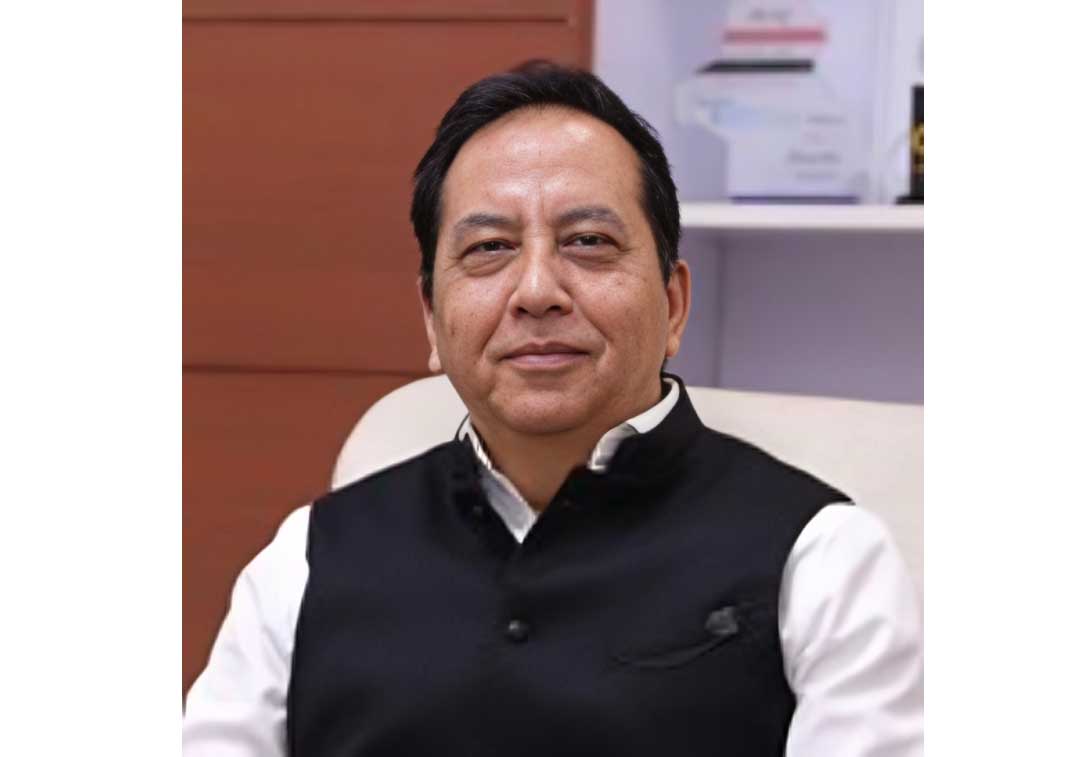
Prof. Dr. Deepak Bahadur Shakya
Vice Chancellor
Madhesh University
Educating for Tomorrow: Nepal’s Blueprint for Contextual and Market-Consonant Higher Education
- College Readers
- 18 Feb 2026
- Views
- Interviews
Nepal’s higher education sector is undergoing a paradigmatic transition; wherein antiquated institutional structures increasingly fail to accommodate the exigencies of a dynamic academic and labor market ecosystem. Madhesh University was conceived not as a rival to legacy institutions such as Tribhuvan or Pokhara University, but rather as a synergistic entity—dedicated to cultivating region-specific, competency-based programs attuned to the socio-economic contours of Madhesh. While extant colleges offer foundational instruction, many remain mired in orthodox curricula, neglecting high-yield sectors such as agriculture, tourism, and healthcare.
Prof. Dr. Dipak Bahadur Shakya, Vice Chancellor of Madhesh University, affirms that Nepal harbors considerable intellectual capital and institutional capacity. Nevertheless, the absence of strategic vision, comprehensive policy architecture, and international visibility continues to hinder systemic advancement. In contrast, countries such as Canada and Australia have reimagined education as both a diplomatic asset and an economic catalyst. Nepal, meanwhile, is still formulating a cohesive narrative to retain its human capital and enhance domestic academic appeal.
Operational constraints—including insufficient credit transfer mechanisms, bureaucratic encumbrances, and ambiguous administrative mandates—have impeded institutional adaptability. Despite these limitations, Madhesh University has implemented exigency-responsive curricula, established transnational partnerships, and enrolled nearly 900 students within a biennium—illustrating that substantive reform is attainable with determination and strategic alignment.
To counteract the exodus of students abroad, Nepal must adopt flexible, technology-infused pedagogical models and reinvigorate its “Study in Nepal” initiative. The national discourse must shift: Nepal should no longer be perceived as a country of constraints, but rather as a crucible of untapped academic and entrepreneurial opportunity. Through intergovernmental coordination, context-sensitive planning, and community-based ownership, Nepal possesses the latent potential to emerge as a formidable academic nexus within the global educational arena.
With many universities in Nepal offering similar programs, why was Madhesh University established instead of relying on existing institutions?
If universities only duplicate existing courses, there is little need for new institutions. The existing universities, like Tribhuvan University, have served well, and I myself am a product of Tribhuvan. However, these universities have not fully addressed emerging educational demands, which is why new universities have become necessary.
Every university should have a clear focus aligned with societal and national needs. It is essential to identify the skilled human resources required by the country and design academic programs accordingly.
Before Madhesh University was established, the region was already a leader in human resources, agriculture, and tourism, with abundant temples, monasteries, and the Parsa Wildlife Reserve. Yet, no academic programs focused on these strengths. Most affiliated colleges under existing universities offered general courses such as BBA, BIM, and BSc.IT without producing domain-specific experts.
Recognizing this gap, we worked to introduce new and specialized courses. Initiating such programs is challenging—it requires effort, financial resources, and government support. Despite these hurdles, Madhesh University is committed to advancing education that addresses the unique strengths and needs of the region.
While campuses like Thakuram Multiple Campus, Ramswarup Ramsagar Multiple Campus, and Sarlahi Campus have produced excellent graduates, their offerings remain limited to Humanities and Management. There are no medical, IT, or skill-based programs, creating a shortage of specialized manpower for industry. Industries often request graduates with specific skills, but current programs cannot meet this demand.
This motivated the creation of Madhesh University—a university capable of developing its own curriculum, running its own programs, and producing skilled graduates tailored to local and national needs. From the outset, we intentionally avoided duplicating programs offered by other universities. Through research in our first year, we identified which subjects were in demand and which programs were missing.
Based on this study, we formulated a need-based policy to introduce programs that directly address the human resource requirements of the Madhesh region and Nepal, ensuring our graduates are skilled and ready to contribute to society and the economy.
As the Vice Chancellor of Madhesh University, how do you view the trend of students leaving Nepal for higher studies after +2, and why should they consider studying in Nepal instead?
I am a marketing student, and in marketing, the first step is always product positioning, followed by sales. When we look at the current trend among students in grades 11 and 12, developed countries have cleverly positioned themselves as prime destinations for education. Their governments have turned education into a form of “educational tourism,” generating revenue while also building a skilled workforce. These countries make substantial investments in policies and strategies that attract foreign students, and they succeed because they offer promises of jobs and higher salaries after graduation.
This strategic marketing has significantly influenced Nepali students, leading them to develop a strong commercial mindset. As a result, countries like Canada, Australia, Japan, and the USA are seen as the ultimate educational destinations. However, we must not forget that Nepal’s education system is also competent and affordable. Fields like medicine and nursing are particularly strong in Nepal, with students easily securing visas and job opportunities directly after completing their studies here.
In addition, sectors like medical science, IT, hotel management, and engineering often offer internships abroad through institutional MoUs, and these internships often lead to permanent employment in those countries. Consequently, Nepal’s hotel and hospitality industries are facing a severe manpower shortage because many trained individuals leave for opportunities abroad.
What this indicates is that, first, Nepal offers a quality education, but we have failed to cultivate this belief among students. Second, while it is often said that students can work and study abroad, the reality is far more challenging than it appears. Financially, studying in Nepal is much more cost-effective. For example, an MBA degree might cost around 5 to 10 lakh rupees in Nepal, whereas the same degree abroad could cost up to 1 crore rupees. Yet, we have not effectively communicated this comparative advantage to our students.
If you visit rural areas today, you’ll rarely find young people, as most have migrated abroad for education. This trend is gradually eroding emotional ties and family relationships, which is detrimental to our social fabric. Furthermore, Nepal still needs skilled human resources. Being a developing country, Nepal is full of problems and where there are problems, there are also opportunities. Entrepreneurs thrive by solving problems, and Nepal presents many such opportunities if we learn to harness them.
To reverse this brain drain, we must actively promote the “Study in Nepal” campaign. The message should be clear: Study in Nepal, get employed here, earn while studying, and build a life with both financial rewards and social respect often surpassing what one could achieve abroad. This requires strong marketing and awareness-building efforts.
Government policy plays a crucial role here. Without clear intent and supportive policies, these efforts may not succeed. The education system needs a comprehensive reform. We can no longer rely on traditional teaching methods. Education must evolve with time adopting innovative pedagogy and integrating technology into every course.
Today’s students seek flexibility. The conventional education system, with fixed schedules, mandatory attendance, and restrictions on working while studying, is outdated. With the rise of online education and paperless systems, students should have the freedom to learn anytime and from anywhere. For example, a student residing in Birgunj should be able to enroll in a Kathmandu-based college, attend online classes, and complete courses remotely.
If we simplify and modernize the education process, it becomes more accessible. Even students working abroad should be able to continue their studies online. If the government implements progressive education policies, we can provide world-class education within Nepal, ensuring that our students thrive at home rather than seeking opportunities elsewhere. Most of the students who go abroad for studies are mentally very disturbed. They want to come back to our nation. If we genuinely study the reality and create an environment accordingly, I believe we can bring our students back to Nepal.
Many Nepali students, parents, and the public believe university programs are not market-relevant or globally competitive, which drives students abroad. How do you respond to this perception?
This statement holds some truth, but it is not entirely accurate. In Nepal, there are limited seats, and the courses are not diversified. People often find that what they studied here doesn’t align with practical needs, which is why they choose to go abroad. If we can reform and transform our courses, we can retain students in Nepal.
In Nepal, universities only call for admissions at a specific time, and there is always a seat limit. Moreover, the same courses are being run repeatedly. If we work on developing new and diverse courses, students would not need to go abroad just to access something new. Expanding the variety of courses would also promote efficiency and cost-effectiveness, making students happier.
The reason education should be given the highest priority is because it is the foundation of every sector in a country whether it is agriculture, administration, politics, hospitals, hotels, or tourism. Every sector is ultimately driven by the manpower produced through education. If education is strengthened, all other sectors will naturally improve. Conversely, if education deteriorates, every sector be it tourism, politics, hydropower, or business will suffer, as they are all interconnected with education. Hence, we need to develop manpower aligned with these sectors, but we are currently failing to conduct that necessary study.
Another point is that countries like Japan, the USA, and Australia have numerous consultancies attracting Nepali students. Why is this happening? It is because education has become a significant means of generating national income for these countries. It is no longer just about learning, but also a profitable business. If we establish MBBS programs in the Terai region, we could earn billions just by attracting students from India alone. In Nepal, the idea is not about restricting resources, but rather about creating strategies to bring students back and build the necessary skilled manpower here. To achieve this, we need to focus on three key areas: first, create an environment where students are encouraged to pursue their studies seriously, even by revising existing courses; second, even if students go abroad, they gain skills, earn some money, and experience life in developed, commercialized countries; third, upon their return, they bring new ideas like dragon fruit farming or ice skating.
If our students can go abroad, why can't we attract foreign students to Nepal? We have universities like Tribhuvan University and Kathmandu University that can introduce innovative programs to draw in international students. The government should develop clear policies in areas like medical education, culture, mountaineering, and environmental studies to organize competitive programs that attract students from around the world.
If the government takes ownership of the education sector, it is certainly possible. However, the current lack of government ownership in education means we have not yet been able to bring a significant number of foreign students to Nepal.
While student migration abroad is a challenge, it can also bring opportunities. What opportunities and challenges do you see in this trend?
If students go abroad and become skilled manpower, bringing them back can help us strengthen our human capital resources. Recently, I visited Pokhara where I met a person who had worked in Japan in trout fish farming. After learning those skills, he returned and established an even better trout farming business in Pokhara’s rural municipality, which now provides employment to 50 people.
Similarly, in Chitwan, a cooperative farming system has been introduced. By collecting land ownership certificates from farmers who own just 1-2 bighas of land, they have started collective farming on 300-500 bighas of land, which has significantly improved productivity compared to the past.
However, the challenge is that when such skilled individuals return, Nepal lacks the necessary policies and facilities, such as loan facilities, business registration, and tax benefits. Every process here is full of hassles. That’s why many people, despite their desire to do something in Nepal, end up returning abroad.
If we can improve these systems, we can encourage our students abroad to return home. Another opportunity is our geographical location we are situated between two rapidly growing countries, India and China. If we can attract people from these countries, it can be highly beneficial.
Tourism should not be limited to sightseeing alone. If we establish universities focused on religious education and research on Buddhism and Hinduism, many students from India and other countries would come to study in Nepal. Although we established Lumbini University, it has now become a general institution offering law and engineering programs, and the original focus on religious education has been sidelined.
If we can bring new ideas and systems to Nepal and build new Nepal with fresh thinking, there are great opportunities in the education sector. Education is a basic need for any country, society, and individual. Even a rickshaw driver dreams of providing good education to his children. Society also wants its youth to be educated, and the nation needs skilled people.
Developed countries have grown because of their strong human resources. If Nepal realizes this and develops a long-term education policy of 10-15 years and implements it effectively, Nepal can become an educational hub. Then 'Study in Nepal' won’t just be a slogan we can truly position Nepal as an international education destination.
Despite promoting ‘Study in Nepal,’ many believe Nepal’s higher education is struggling. What role should the government play in changing this mindset, and what immediate actions are needed?
If we truly want to improve the education system in Nepal, it is essential to create a seamless connection between school education and higher education. Unfortunately, such integration is currently lacking. Schools operate in one direction, secondary education in another, and universities follow yet another path. Although we have the Council for Technical Education and Vocational Training (CTEVT), even technical education faces significant challenges.
For instance, the diploma offered by CTEVT is a three-year program. However, when students from this track aspire to pursue higher education, there is no established credit transfer system. In our system, students who complete a two-year +2 program can directly enroll in bachelor’s degrees. But those who complete a three-year diploma must start from the beginning of the bachelor's program because their credits are not recognized. This creates an unnecessary barrier for students who have already invested time and effort in specialized studies.
Moreover, universities are not designing their programs in alignment with the subjects taught at the school level. Ideally, higher education curricula should build upon the foundations laid during school, but instead, universities operate in isolation. This is why students with certain grades, such as ‘C,’ are often undervalued, despite having chosen specialized streams early on. For example, law students start law subjects in Grade 11, management students pursue management, future doctors focus on biology, and prospective engineers study physics. But when these students want to pursue higher education in their chosen fields, the pathway is not clearly defined.
The government needs to clarify these academic pathways through concrete policies. There should be a clear system that maps school subjects directly to higher education opportunities. Unfortunately, what we see today is a random expansion of universities without addressing these fundamental issues.
I believe that either we should refrain from opening more universities or, if we do, the University Grants Commission (UGC) must ensure that these universities meet standardized requirements. Local governments should also take responsibility and ownership of the universities operating in their regions. Every university must have a clear objective specifically, to produce the skilled manpower needed for the nation. Additionally, there should be regular monitoring, evaluation, and analysis to assess the quality of education being provided.
Once these aspects are addressed, instead of creating unhealthy competition between universities, we can foster collaboration and cooperation among them.
Madhesh University focuses on three major areas. First, we believe that skill-based education must be integrated starting from schools. Second, there is a shortage of competent teachers, which needs urgent attention. Third, considering that our country has already transitioned to federalism, there is a need to rethink its purpose and implementation. Although we have adopted federalism, many people perceive it as meaningless, merely a division of power rather than a tool for real development. In reality, federalism is not just about the power division from local to higher levels; it should be about resource division, ensuring balance, and fostering holistic development.
Because these aspects are lacking, Madhesh University is committed to introducing courses that address federalism, establishing skill schools from the school level up to colleges, and developing teacher training programs to strengthen the education system from the ground up. If any institution is already working in these areas, we are open to collaboration. For instance, we have introduced the BBA program in Madhesh, which previously was not available here. We have run this program in association with Kathmandu University.
In this way, if universities identify their specific roles and focus areas, they can truly contribute to development in their respective regions. Currently, when we compare the curricula of universities in Nepal, nearly 90% of their courses are similar.
Has Nepal’s higher education sector been deteriorating because the government, driven by various temptations, keeps opening universities without proper guardianship and lacks an effective management approach?
Yes, for example, I have recently established Madhesh University, which was founded by the Madhesh government. According to our Act, we are allowed to apply for national and international collaborations, and we can run it in collaboration with international colleges following an international model. But when it comes to the policy and position of the government, the situation is quite challenging.
For instance, although I am running the university, there is a lack of budget. Last year, we received a grant of 20 crores, but this year, we received only 10 lakh. We are trying to introduce skill-based programs. When we approached the University Grants Commission (UGC), they told us that unless the Act of the Technical University is amended, they cannot extend any support. Similarly, when we approached the federal government, they said that since the university was established by the provincial government, it is the province’s sole responsibility to manage it.
When it comes to academic programs, they asked us what courses we plan to run, but there is no directive from their side. When we went to CTEVT, and even the Public Service Commission, they said that everything must be aligned. We thought of opening schools under the university, but the response was that universities should focus on bachelor-level education rather than opening schools.
We are attempting to integrate and cooperate with CTEVT, such that the university can operate courses starting from bachelor level, and then upgrade the diploma courses to master’s level, eventually progressing to PhD and advanced research. But there is a gap in the mechanism even at the central level for running such programs in cooperation.
Right now, the university is still in a struggling state. If the government had supported us, motivated us, and provided us with the land we needed, I could have invested 500 crores, and thousands of students would have benefitted from higher education. Who takes responsibility for this gap?
This lack of coordination is the main problem. The government’s perspective on education is weak, and even now the government seems confused. They have not yet figured out the right path for education. If this continues, we will lag behind.
In a federal system, universities must be established, but instead of competing with each other, there should be collaboration. A common umbrella organization should be formed by the government to oversee all universities, assign responsibilities, monitor their performance, evaluate their work, and provide necessary support. If a university does not perform, there should be an evaluation mechanism that corresponds to the required interventions.
The government must take this initiative. Otherwise, this confusion will continue, and education will deteriorate even further.
What qualities should university leaders in Nepal have to effectively manage institutions and raise higher education standards, and how can they move forward in this regard?
Leadership is not just applicable within universities but also at the national level. The country's leaders formulate policies, govern, and provide direction. If national leadership is effective, it naturally supports the Vice Chancellors (VCs) in universities. Therefore, it is crucial for national leadership to take higher education seriously and provide strategic oversight.
Within universities, the role of the VC is vital. But if someone is appointed as VC yet their hands and feet are tied, we cannot call that real leadership. Unfortunately, in many universities, the appointment of VCs is influenced by political maneuvering rather than merit. For example, the former Vice Chancellors of Tribhuvan University and Pokhara University had commendable leadership. Yet, in general, when a new VC is appointed, they often arrive with big promises, but evaluations later show little to no significant contribution they come and go without making lasting impacts.
A VC should have a clear vision. For that vision to materialize, leadership at all levels must support, empower, and push forward the university's agenda. This is where decentralization and the principles of federalism hold importance. A university needs a VC who can face challenges effectively, and if they are unable to deliver, there should be a system to replace them based on proper evaluation not based on political interests or affiliations.
Another problematic mindset in Nepal is evident even in the education sector. Many people, even those holding higher posts, are reluctant to send their children to community schools, preferring private schools instead even if the quality of education is similar. This stems from a societal mindset that portrays community schools as inferior to private ones, even when the same national board conducts the SLC exams, the same board awards higher education degrees, and the government itself issues the certificates. The only difference lies in the management patterns between community and private institutions.
If the government had been fully capable of effectively running public schools, there wouldn't have been a need for private schools. However, in developing countries like Nepal, where government resources are often limited, private education emerged as a necessary alternative to meet educational demands in the absence of sufficient state capacity and leadership.
Looking at federalism now, community schools have almost no value; people tend to value private schools more. Saying that private schools give better value while community schools provide better education is a contradictory statement we have made, which has confused parents and teachers alike. Nowadays, what is happening is that people send their children to private schools up to grade 10, but for college, they send them to community colleges. Because of this, people’s mindset is dual. This has caused some decline in the development of education, and government schools are also struggling because the government has not been able to run them effectively. Due to this perception, education in Nepal is lagging instead of progressing. We need to bridge this gap as well.
Because the government has not provided proper evaluation based on capacity, monitoring, clear policies, or incentives, private schools operate in their own way, community schools in their own way, and regional schools in their own way. This lack of coordination among them causes problems. Currently, our education system is city-centric. When you go to rural areas, children have reached only up to about grade 10, and very few have opportunities to pursue higher education beyond that. I conducted a survey across eight districts of Madhesh Province and observed that most higher education institutions are affiliated with PU and are primarily concentrated in the district headquarters. On average, there are about 10 to 20 higher education institutions operating in each district. In Birgunj alone, there are around 25 colleges providing higher education. However, as you move slightly away from these urban centers, there are hardly any colleges available.
If we could expand our reach to students in these more remote areas, we would not face a shortage of students. Furthermore, if we can offer academic programs that align with the interests and needs of these students, we can encourage them to pursue higher education locally rather than seeking alternatives elsewhere.
Many universities in Nepal have excellent plans on paper, but little is visible in practice. What do you see as the main obstacle to effective implementation?
The main obstacle now is that after establishing a university, it needs proper guidance. Take for example my experience with Madhesh University. Once the university is established, the real work begins.
The issue I’ve noticed is that infrastructure takes time to develop. Earlier, at Madhesh University, we lacked proper land, which created difficulties. But we didn’t give up. Today, despite the challenges, Madhesh University has been established. Initially, classes ran for only a year.
For example, in Tribhuvan University, has there been a case where leadership couldn’t execute plans effectively and left things incomplete?
Yes. In older universities, obstacles exist. Students are still present, but due to administrative inefficiencies, work could not progress smoothly. However, at Tribhuvan University, which attracts students from all over the country—from hills to plains, east to west—if a major university falters, it creates negative perceptions. Nevertheless, it still remains one of the universities that offer the widest range of subjects. That is why we must take examples from it.
What are the main challenges facing universities today?
At Madhesh University, the main obstacle was land. We had some support from guardians, and we could raise some funds, but if that hadn’t happened, we wouldn’t have progressed. We started Madhesh University, and within one year, we created policies—staff policies, administration policies, organizational policies, and strategic plans. Within a year, we organized courses, and today we run with 400–500 students this semester, totaling around 800–900 students using our own resources, including student fees.
Today, we also collaborate internationally. For example, we partnered with India’s Chanakya National University to develop specific courses. We have worked with Finland on teacher training programs, and with Swiss embassies and foundations to develop faculty models. We coordinate with CTVT for skill schools and related training. All this work will show results within a year.
The main obstacle, however, is that the government has not provided adequate budget or physical infrastructure. Without land and proper grants, infrastructure development is slow. If the government clarifies support and acts as a strong guardian, we can make Madhesh University a model for society and the nation.
Finally, what message would you like to give to the students?
To the students, I want to say this: I speak from experience. I started learning at a small temple in my village, studied in government schools, completed my bachelor’s in Thakur, my master’s at Tribhuvan University, and today I am part of Madhesh University. This shows that even studying in Nepal, one can achieve success.
To the students, I say: study in Nepal, in your own province, in your own city. Universities in Nepal now offer relevant courses, pedagogies, and environments, so there is no need to go elsewhere. Many students who previously went abroad faced mental health challenges and setbacks. Here, they can grow, be satisfied, and achieve more.
In the long term, I urge students to change their mindset: Nepal is not a country of problems alone, but a country of opportunity. Grasp the opportunities here. Fulfill your dreams. Universities in Nepal are committed and capable of providing the environment for this. Therefore, I sincerely request all students to study in Nepal—your own province, your own city—and take advantage of the opportunities available here.
Popular Categories
Trending This Month








 Established in 2065 BS, COLLEGE READERS is a premier national-level educational magazine dedicated to serving the academic and informational needs of school and university students, teachers, educators, and concerned ones in Nepal. The magazine provides current and comprehensive information on various educational opportunities worldwide, aiming to guide school and college-level students in their academic and career journeys. It also highlights essential support services and service providers that play a crucial role in shaping students' career paths in today's competitive world.

- Our Location Putalisadak, Kathmandu
- Send Us Email collegereaders123@gmail.com
- Call Us Now 977 01 4518759
