
Call now
977 01 4518759
Send Message
collegereaders123@gmail.com
Our Location
Putalisadak, Kathmandu
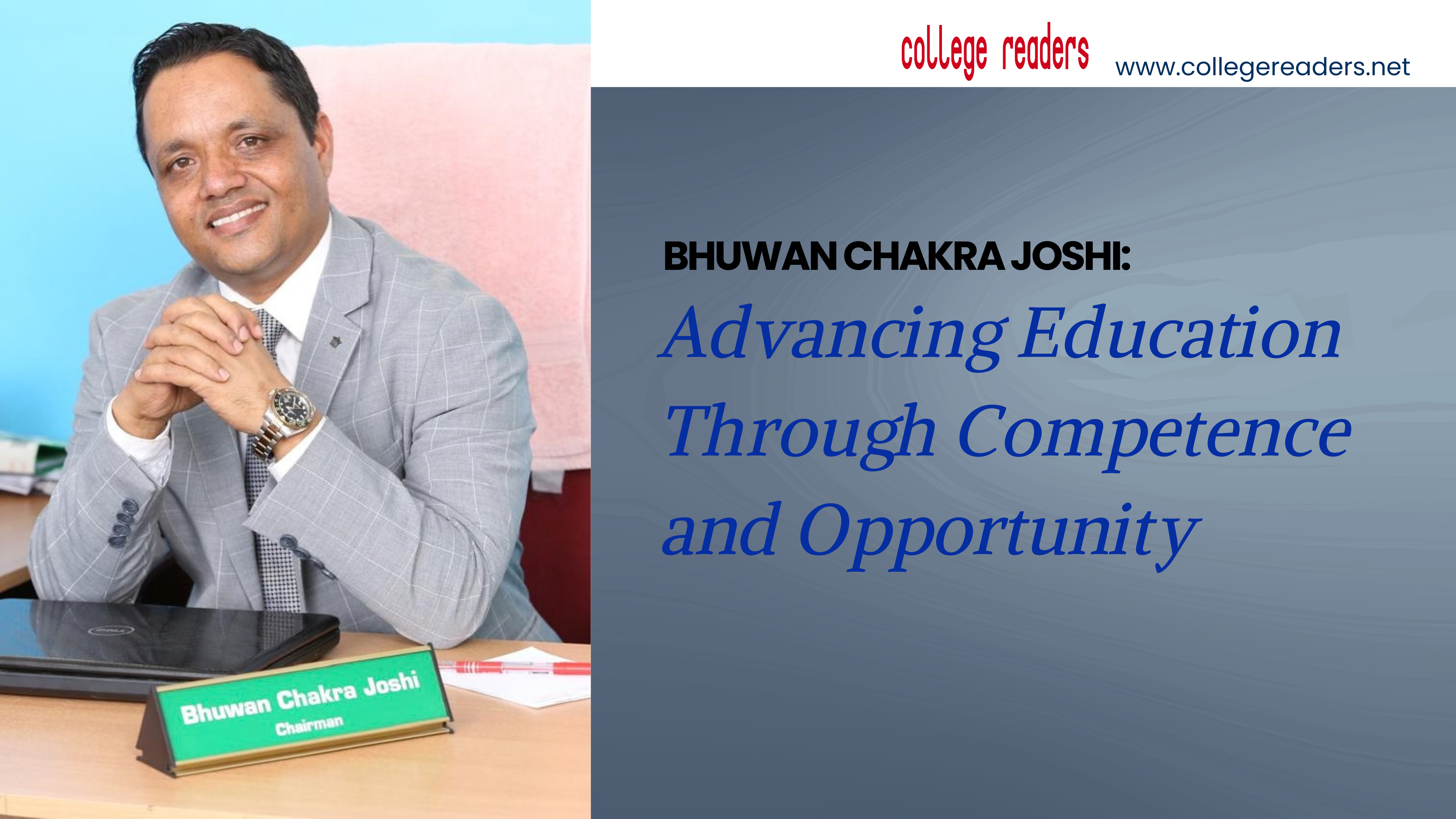
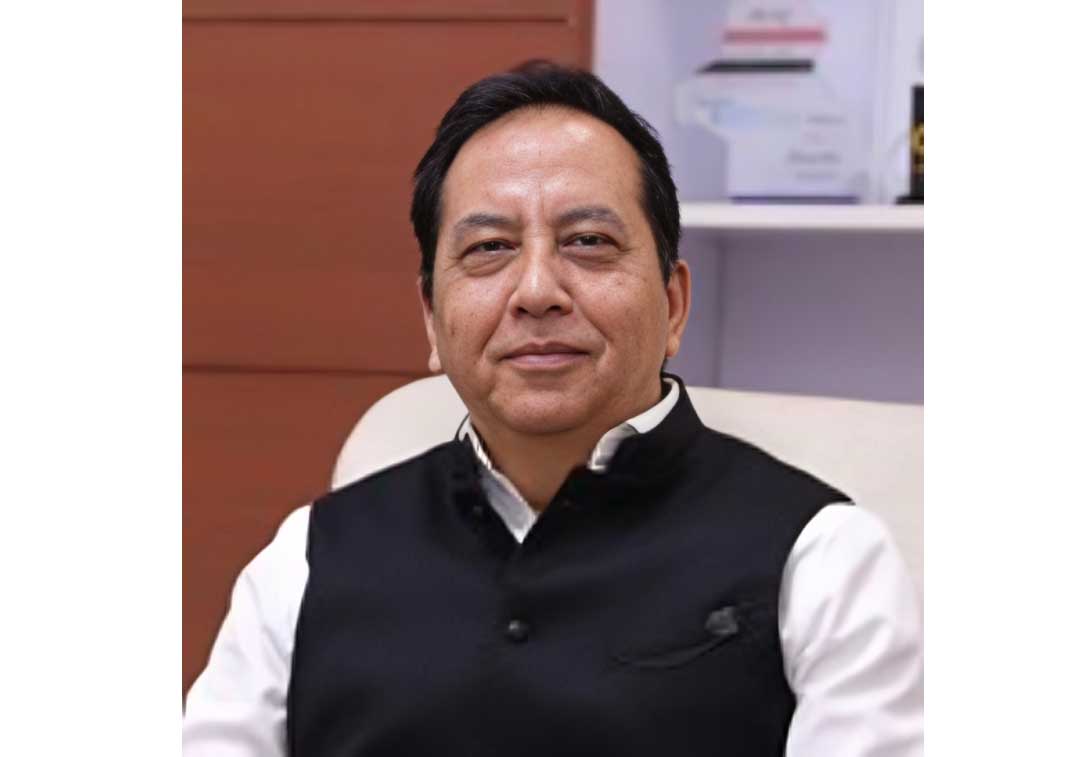
Bhuwan Chakkra Joshi: Advancing Education Through Competence and Opportunity
- College Readers
- 24 Sep 2026
- Views
- Features
From Teaching to Institutional Leadership
Joshi’s commitment to education has deep personal roots. Growing up in a teacher’s family, he watched his father serve in public education and came to understand teaching as both a profession and a social responsibility. He later earned an MSc in Medical Microbiology and an MA in Sociology from Tribhuvan University. He is also associated with the Institute of Medicine as a faculty member in microbiology.
His entry into the profession was modest. After completing his MSc, he spent two to three years teaching at various colleges and institutes. Much of this early work took place in Bagbazar, where he taught bridge courses. He recalls those years as a demanding but formative period in his career.
“The effort I made in almost every street of Bagbazar helped bring me to where I am today,” he says.
These assignments strengthened his subject knowledge, developed his classroom skills and helped him understand how students respond to different teaching methods. They also introduced him to the operational demands of private education.
Joshi’s first full-time college appointment was at The Times International College in Dillibazar, where he joined the Plus Two programme as an assistant coordinator while continuing to teach. Earlier, during his postgraduate studies, he had briefly worked at a college offering a bachelor’s programme in technology. Together, these experiences helped him move from classroom teaching into academic coordination and institutional management.
His decision to become an investor and institutional leader was influenced partly by the uncertainty he experienced as an employee in the private sector. He felt that strong performance did not always translate into professional stability or adequate recognition.
Entrepreneurship had also interested him since childhood. Although his father was primarily a teacher, he had some involvement in business, which helped Joshi see education and entrepreneurship as compatible pursuits.
Education was a natural field for Joshi to invest in. He understood students’ needs, classroom practices and institutional operations, and he was confident in his ability to communicate with students and parents. After several years of professional experience, he felt ready to help lead an institution of his own. In 2071 BS, he and his team took over Himalaya School & College.
Expanding into Healthcare and Technical Education
Joshi’s professional interests later extended to healthcare and technical education, reflecting his academic background in medical microbiology. Before joining Himalaya College, he had helped establish a 25-bed hospital in Kalanki with several partners.
His involvement in technical education began with an 18-month laboratory assistant programme. As his experience grew, he became involved in additional programmes and institutions. He recognised the value of technical education for students seeking employment or self-employment within a relatively short period.
Joshi also acknowledges the contribution of his wife, Sagar Dhakal Joshi, to his professional journey. Her support, encouragement and ability to navigate challenges have been important to his progress. As Managing Director of both Amity Global Education and School of Technical Education, she plays a central role in their management.
For Joshi, the choice between technical and general education should reflect a student’s interests, career aspirations and family circumstances. While some students can devote several years to conventional academic qualifications, others need practical training that enables them to earn an income within two or three years. Technical education can provide that pathway, particularly in healthcare, engineering and other specialised fields.

Preparing Students for Professional Life
At Himalaya School and College, Joshi leads an institution established in 2045 BS. It now offers education from Montessori through to master’s level, including programmes affiliated with Tribhuvan University and Far Western University.
Its bachelor’s offerings include BBA and BSc CSIT, with plans to expand its academic portfolio. Joshi sees strong demand for information technology education but believes that the limited number of university places prevents many capable students from pursuing their preferred subjects in Nepal.
His response is to help create more credible educational opportunities within the country. He wants students to gain the knowledge, skills and confidence needed for employment and independent professional practice. In his view, classroom instruction alone is insufficient.
Joshi measures an institution’s success by what its graduates go on to accomplish. Himalaya has educated thousands of students since its establishment, but he takes particular pride in graduates who have contributed to Nepal or earned recognition through their work at home and abroad. His ambition extends beyond sustaining enrolment: he wants the institution to develop competent, employable and socially responsible graduates.
Connecting Curricula with Changing Professional Needs
This ambition informs Joshi’s assessment of Nepal’s existing curricula. He argues that many university courses have not kept pace with technological advances and changes in professional practice. Developments in artificial intelligence, robotics and modern medical procedures, he believes, should already be reflected in what students learn.
A syllabus that remains unchanged for several years can leave graduates inadequately prepared for the labour market. Universities must therefore review their curricula regularly, introduce relevant subjects and respond more promptly to evolving professional requirements.
Affiliated colleges have an equally important responsibility. They must invest in laboratories, technology, teaching expertise and practical learning opportunities to deliver these programmes effectively.
Joshi applies the same expectations to private institutions. Their responsibilities extend beyond admitting students, collecting fees and providing theoretical instruction. Colleges should help students develop practical skills, prepare for interviews, apply for jobs and communicate independently with universities and employers.
Advocating Clear and Consistent Education Policies
Joshi calls for clearer and more consistent government policies towards private education. He recognises the need for regulation but believes it should also support the sustainability of responsible institutions.
He points to the billions of rupees invested by private operators in educational infrastructure and argues that inconsistent policies and prolonged delays in programme affiliation create uncertainty for institutions seeking to develop and expand.
He also believes the state should recognise the contributions of institutions and professionals who choose to invest and work in Nepal. Many of his classmates have established careers abroad, where professional opportunities and earnings may be greater. Joshi chose to remain because he wanted his work to contribute to the country.
He expects the government to hold private institutions accountable while creating conditions that support sustained investment in education.
A Five-Year Vision for Himalaya
Joshi’s five-year development plan begins with the school. He aims to make it one of Koteshwar’s most recognised schools by expanding its physical space and adopting a more progressive approach to education.
At the college level, he plans to organise programmes affiliated with different universities into separate academic wings. This structure would allow each wing to receive focused management and resources suited to its academic needs.
Accessibility remains central to his vision. Himalaya provides scholarships to students from financially disadvantaged families, as well as those affected by conflict, earthquakes and other difficult circumstances. It also participates in mayoral and government scholarship programmes.
However, Joshi wants the institution’s reputation to extend beyond affordable fees. His goal is to combine accessibility with modern technology, effective teaching and education that prepares students for employment.
Encouraging Students to Take Ownership of Their Education
Joshi’s message to students is direct: understand why you have chosen a subject, explore the careers it can lead to and identify the skills you need to develop beyond the syllabus.
He also encourages students to participate actively in their education. Institutions can provide facilities, guidance and opportunities, but students must be willing to ask questions, engage with teachers and take responsibility for their progress.
Ultimately, Joshi wants Himalaya to become an institution that students actively seek out, parents trust and the surrounding community respects. He believes that such a reputation must be earned through relevant academic programmes, capable graduates and the consistent efforts of the institution’s entire team.

Popular Categories
Trending This Month








 Established in 2065 BS, COLLEGE READERS is a premier national-level educational magazine dedicated to serving the academic and informational needs of school and university students, teachers, educators, and concerned ones in Nepal. The magazine provides current and comprehensive information on various educational opportunities worldwide, aiming to guide school and college-level students in their academic and career journeys. It also highlights essential support services and service providers that play a crucial role in shaping students' career paths in today's competitive world.

- Our Location Putalisadak, Kathmandu
- Send Us Email collegereaders123@gmail.com
- Call Us Now 977 01 4518759
