
Call now
977 01 4518759
Send Message
collegereaders123@gmail.com
Our Location
Putalisadak, Kathmandu
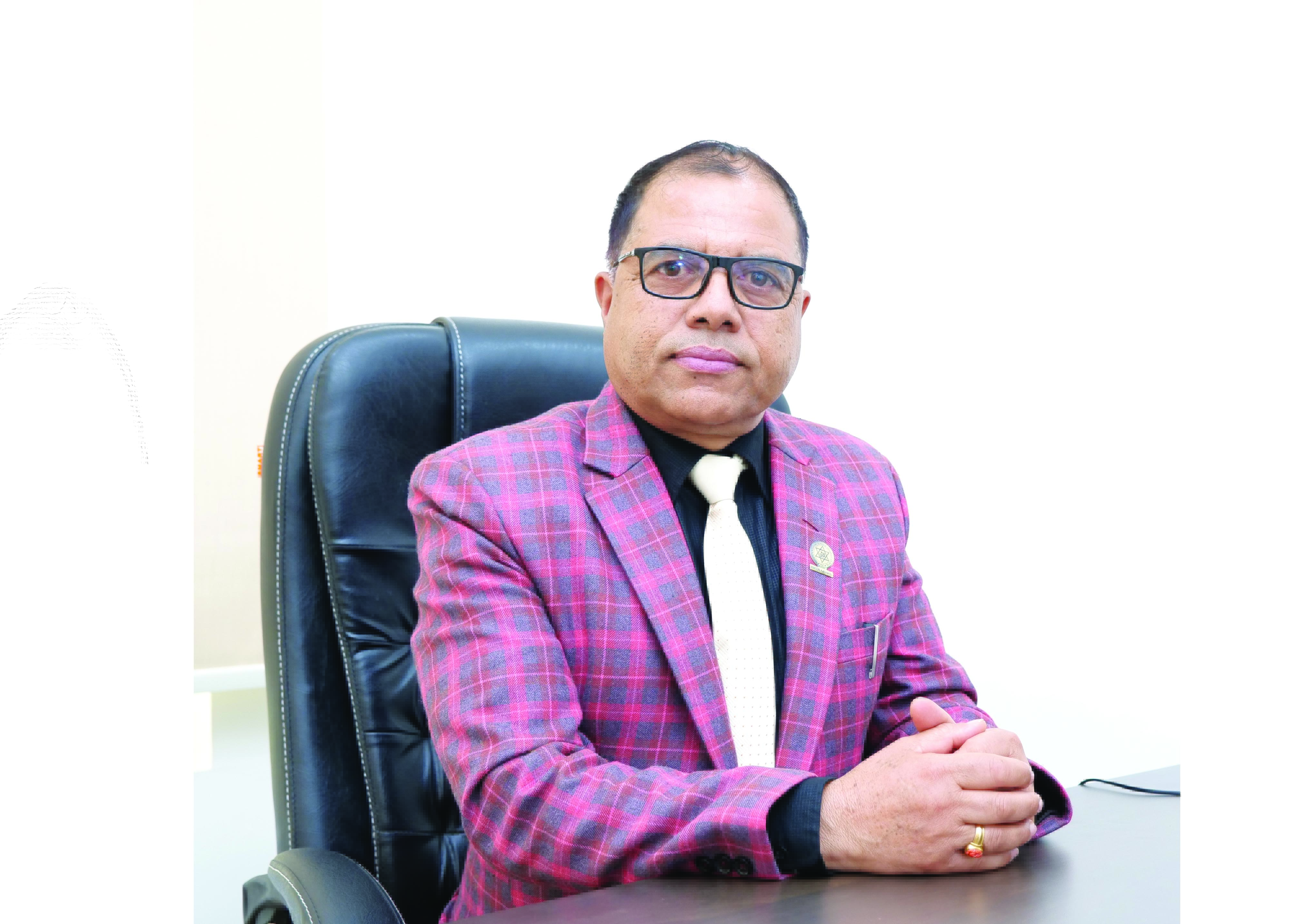
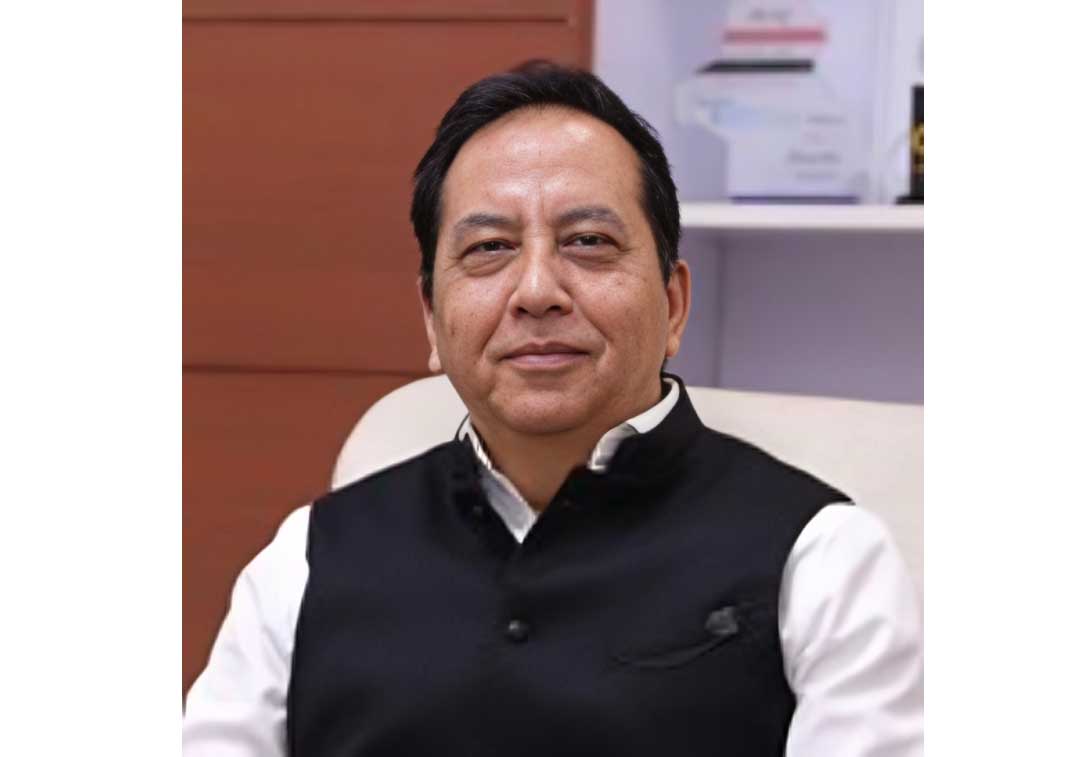
Gopal Prasad Acharya
Founder Principal
Mt. Glory School, Kathmandu | Co-President, PABSON
We Adopt the New Age of Learning: Interactive, Practical, & Transformative
- College Readers
- 01 Apr 2026
- Views
- Interviews
In Nepal’s dynamic educational landscape, Gopal Prasad Acharya stands as a seasoned educator, visionary leader, and policy advocate. As the Founder Principal of Mt. Glory School, Kathmandu, and Co-President of PABSON (Private and Boarding Schools’ Organization Nepal), he has long been at the forefront of shaping quality education in the country.
With decades of experience, Acharya brings a grounded yet forward-looking perspective on the evolving challenges of schooling—from policy uncertainty and digital disruption to the urgent need for value-based, skill-oriented education. In this insightful conversation with College Readers, he speaks candidly about the realities of Nepal’s education system and the collective responsibility required to transform it.
In the current changing context of Nepal, what opportunities and challenges do you see in school education?
Education today is both an opportunity and a challenge. On one hand, there is strong potential to transform Nepal into an educational hub through collaboration between the public and private sectors. If we aim to produce capable citizens and reduce educational unemployment, both sectors must work together in partnership.
However, challenges are equally significant. Declining student populations, policy uncertainties, and unclear investment environments create difficulties for private institutions. There are also ongoing discussions around education policies and bills that raise concerns about sustainability and long-term planning.
Private education plays a vital role—it serves a large proportion of students and contributes significantly to the national education system. If this sector is weakened or ignored, the entire educational structure could suffer. Therefore, recognition, collaboration, and balanced policies are essential.
There has been discussion about scholarship provisions in private schools. What is your view on this?
Scholarship is an important responsibility, and private schools have been providing it for many years. In fact, around 10% of students receive scholarships in many institutions.
However, the process must be systematic. Local governments and authorities should identify and recommend genuinely deserving students—especially those from marginalized or disadvantaged backgrounds. Without proper identification, the intended beneficiaries may not receive these opportunities.
We are committed to supporting such students, but the system must ensure fairness and transparency. Education should reach those who need it the most.
There are concerns about policy decisions affecting private schools. How do you view this?
One of the major concerns is the idea of imposing fixed timelines or conditions—such as forcing institutions to become non-profit within a certain period. Such decisions can discourage investment and dedication.
Education institutions require long-term commitment, planning, and resources. If uncertainty is introduced, it affects not only school management but also teachers, students, and the overall quality of education.
Private schools are not separate from society—they are part of the national system. Therefore, policies should aim to strengthen collaboration rather than create division.
How do you define quality education in today’s context?
Quality education today is very different from the past. Earlier, teaching was largely teacher-centered and theoretical. Now, students are more dynamic, curious, and exposed to multiple sources of information.
To ensure quality, several factors are essential:
- Skilled and well-trained teachers
- Effective classroom management
- Integration of technology
- Understanding students’ psychology and interests
“A teacher must not only teach content, but also understand how students learn.”
Students today prefer practical learning rather than passive listening. Therefore, education must become more interactive, skill-based, and technology-friendly.
PABSON has also been organizing training programs, workshops, and seminars to strengthen teachers’ capacity and improve educational standards across schools.
How is Mt. Glory School implementing student-centered learning?
At Mt. Glory School, we focus on a holistic approach that includes:
- Knowledge
- Skills
- Attitude and behavior
- Technology integration
We have introduced various platforms such as:
- Student clubs
- Quality circles
- Presentation-based learning
- Communication and public speaking opportunities
Students are encouraged to express their ideas, present projects, and engage in discussions.
“Communication is a skill—students must learn to express, not just memorize.”
We also use smart boards and modern teaching tools to create engaging classrooms. The goal is to make learning interesting and meaningful so that students willingly participate.
There is a growing concern about declining reading culture among students. How can this be addressed?
Reading culture must be intentionally developed. It does not happen automatically.
We suggest allocating dedicated reading time in schools—at least 45 minutes to one hour daily. Teachers, principals, and even parents should actively participate in reading activities to set an example.
At home, parents should create an environment where children read regularly instead of spending excessive time on mobile devices.
“What children practise daily becomes their habit—and eventually their character.”
If schools and families work together, reading culture can be revived.
How important is the relationship between teachers and students in modern education?
The teacher-student relationship is crucial. While a certain level of discipline and distance is necessary, teachers must also build friendly and respectful connections with students.
Today’s generation—Gen Z and upcoming Alpha learners—are highly aware and expressive. They expect to be heard.
Teachers must:
- Listen to students’ ideas
- Encourage curiosity
- Address their questions with respect
“Students should not be silenced—they should be guided.”
Similarly, parents must also build friendly relationships with their children. Activities like playing games together, engaging in conversations, and spending quality time can strengthen bonds and improve learning outcomes.
How can schools make learning more effective and engaging?
Learning must be experiential. I often compare it to swimming—you cannot learn swimming without entering the water. Similarly, education requires active participation.
Schools should:
- Identify students’ interests
- Guide them towards their goals
- Use practical methods and real-life examples
We also expose students to inspiring biographies and success stories to motivate them.
However, one important truth is that external efforts alone are not enough. Students must develop inner motivation—a strong desire to learn and grow.
“When a student develops inner drive, learning becomes natural.”
What message would you like to give to parents and the wider community?
First, I would like to extend my heartfelt best wishes to all parents and stakeholders for their continued trust.
Parents must understand that education is a shared responsibility. Schools alone cannot shape a child’s future.
They should:
- Stay engaged in their children’s learning
- Maintain communication with schools
- Create a supportive home environment
“Parents are the first teachers, and their role cannot be replaced.”
At Mt. Glory School, we are committed to maintaining the trust placed in us. Our goal is to ensure that every child grows into a capable, confident, and responsible individual.
Popular Categories
Trending This Month








 Established in 2065 BS, COLLEGE READERS is a premier national-level educational magazine dedicated to serving the academic and informational needs of school and university students, teachers, educators, and concerned ones in Nepal. The magazine provides current and comprehensive information on various educational opportunities worldwide, aiming to guide school and college-level students in their academic and career journeys. It also highlights essential support services and service providers that play a crucial role in shaping students' career paths in today's competitive world.

- Our Location Putalisadak, Kathmandu
- Send Us Email collegereaders123@gmail.com
- Call Us Now 977 01 4518759
