
Call now
977 01 4518759
Send Message
collegereaders123@gmail.com
Our Location
Putalisadak, Kathmandu
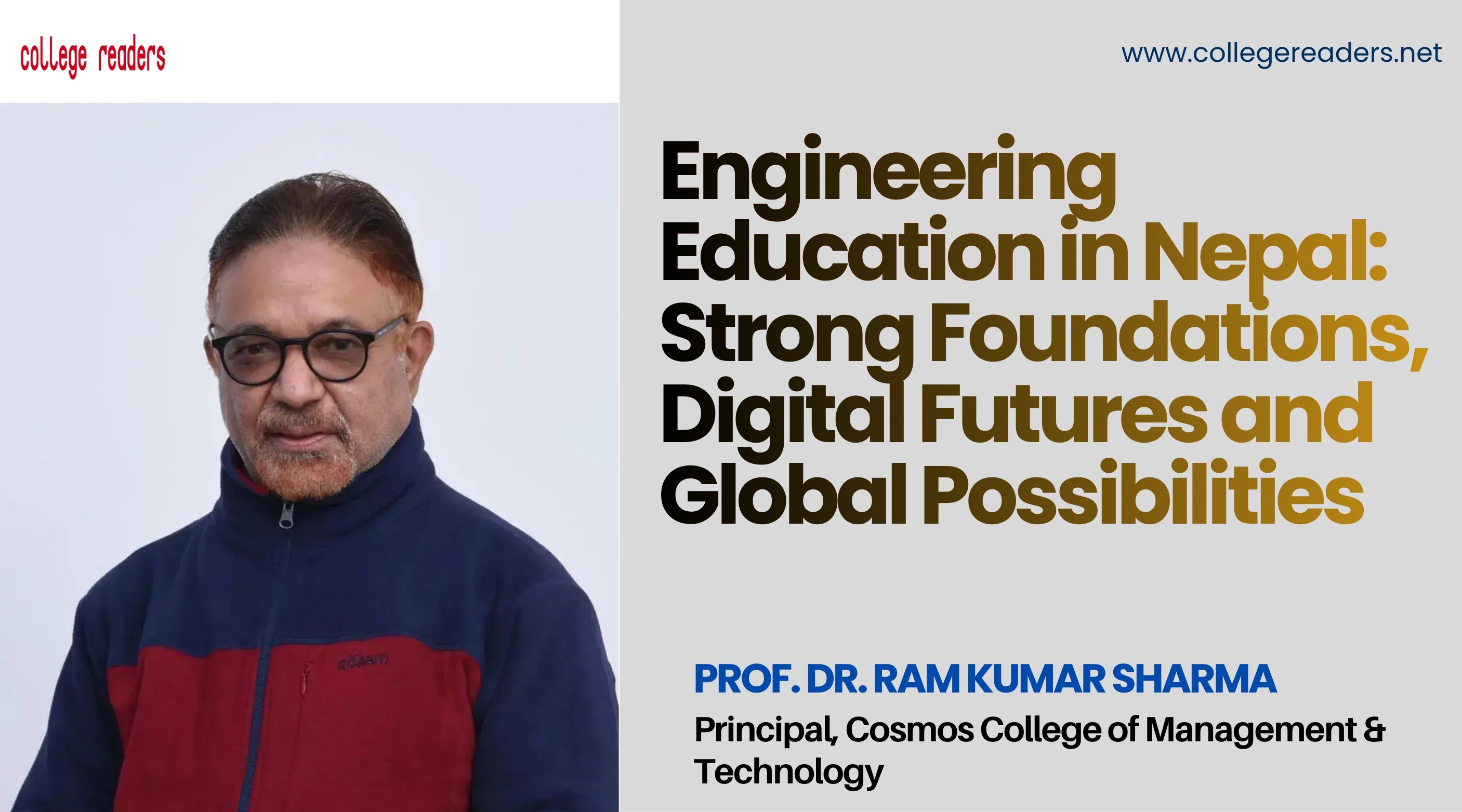
Engineering Education in Nepal: Strong Foundations, Digital Futures and Global Possibilities
- College Readers
- 07 Jul 2026
- Views
- Interviews
Civil Engineering and National Development
This does not mean that civil engineering has become less important. Nepal still needs roads, transport systems, airports, water supply projects, earthquake-resistant buildings and planned urban infrastructure. A developing nation cannot move forward without civil engineers. But the growth of civil engineering depends heavily on government planning, budget allocation and long-term national priorities. When the state invests in construction and reconstruction, civil engineering naturally expands. When infrastructure investment slows, student interest also becomes weaker.
IT offers a different route. A student does not always have to wait for the government or a large consultancy. With skills and confidence, one can approach private companies, design websites, develop small applications, teach computer courses, provide online tuition or support digital projects. Civil engineers usually need teams, consultancies, field exposure and institutional reputation. IT students also need teamwork for big projects, but they have more freedom to begin individually and grow gradually.
Learning and Earning Together
One of the strongest attractions of IT education is the possibility of learning and earning together. I have seen students who attend regular classes and, in the evening, design websites, make small apps, teach programming or provide computer-related services. This experience makes them practical, confident and financially aware. However, earning should never weaken learning. Short-term income becomes meaningful only when it supports long-term academic growth. If students become distracted from their fundamentals, the benefit is limited.
Nepal’s engineering education, especially in IT and computer engineering, provides strong theoretical foundations that can prepare students for global opportunities from within Nepal.
How Nepali Higher Education be more Attractive?
There is also increasing discussion about Nepali university programs and foreign-affiliated colleges. Many foreign-affiliated programs are expensive, yet students are attracted to them because they appear more flexible and practical. Their systems often depend on projects, regular observation and small tasks. Students may find them easier and more application-oriented.
Our system is different. It still carries a traditional character, but that is not entirely negative. We emphasize fundamentals, theory, mathematics, physics and scientific discipline. IT may not require chemistry in the same way as other fields, but mathematics and physics remain important for deeper technical understanding. Nepali engineering programs are rigorous because students must study foundational subjects and pass demanding examinations. This may feel difficult, but it builds strong intellectual discipline.
In my view, our weakness is not foundation; our weakness is application. Nepali students generally have strong mathematics and technical understanding. They may need time to adjust in practical environments, but once they receive exposure, they often perform well abroad. Therefore, we should not weaken our foundations. Instead, we should add more project-based learning, internships, industry linkage, problem-solving exercises and practical assignments.
Affects of the Social Charm
Another challenge is social perception. Many families still believe that a foreign degree is automatically superior. Even when the academic difference is not very large, the label of a foreign university carries social prestige. Students interested in research, public service or scholarships abroad often understand the value of strong foundational education in Nepal. But many others are influenced by the charm of foreign degrees. We must explain that a degree should be judged by knowledge, discipline, skill, confidence and opportunity, not merely by its foreign name.
Why Students Should Go Abroad After Graduation
My advice to students is clear: complete your bachelor’s degree in Nepal and then go abroad for higher studies. I say this to students at college and to my own children. After graduation, students become more mature, skilled and capable of handling international academic life. Scholarships after Plus Two are limited and available only to a few. After graduation, students have stronger academic profiles and better chances of receiving support. Even without a scholarship, they can sustain themselves better because they already possess knowledge and skills.
Students who leave immediately after Plus Two often struggle during the first semester. They may not be able to work at first, and when they begin working, they may become distracted from their studies. In some cases, the programs they join may not contain the depth of pure engineering, even if the degree carries that title. Therefore, going abroad after building a strong foundation in Nepal is wiser.
Reforming Engineering Education for the Future
Nepal’s engineering education is strong and rigorous, but it must continue improving. Tribhuvan University, Pokhara University and other institutions are trying to modify their systems, but our process is slow because government procedures, ministry approvals and institutional formalities take time. Foreign universities can quickly introduce programs according to market demand. Nepal also needs more academic flexibility, faster curriculum reform and stronger links with industry.
Students should complete their bachelor’s degree in Nepal before going abroad, as maturity, skills, scholarship prospects and academic stability become stronger after graduation.
The world is moving toward IT. Banking, agriculture, construction, medicine, entertainment, innovation and even imagination now depend on digital knowledge. AI and computer systems are transforming every sector. No organization can progress without IT involvement. Therefore, students who combine formal education with practical skills can present themselves effectively anywhere in the world.
My Message to Plus Two Graduates
To Plus Two graduates, my message is simple: be determined. If you want to study engineering, strengthen your mathematics and choose your field with clarity. Whether it is architecture, civil engineering, IT, computer engineering or another branch, your decision should be serious and informed.
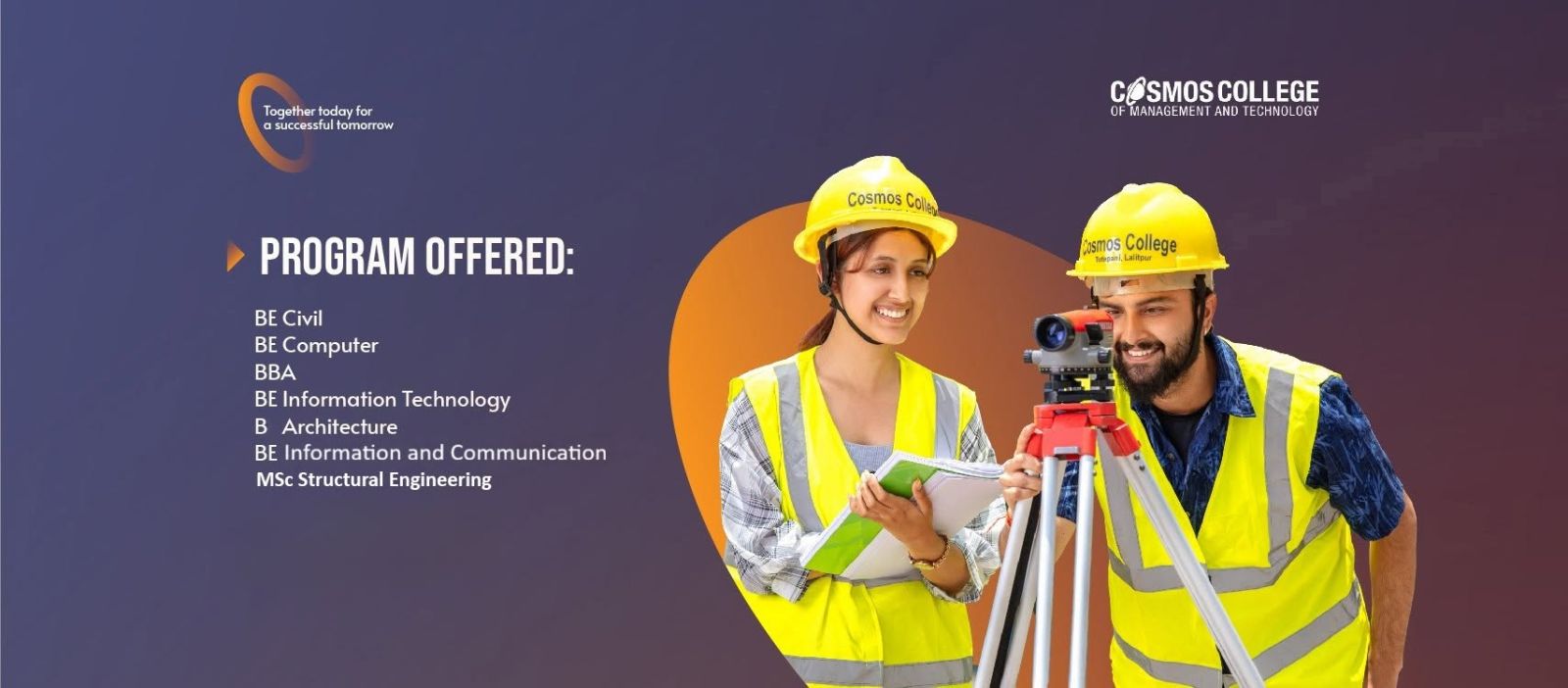
At Cosmos College, our responsibility is not only to award degrees but to help students build futures. We want them to gain knowledge that opens doors to public service, scholarships, internships, employment, entrepreneurship and international opportunities. Through additional learning in artificial intelligence, machine learning and emerging technologies, we aim to prepare students for the future.
Engineering education should not merely produce certificate holders. It should produce capable, confident, ethical and globally competitive human resources. Nepal has the talent. What we need now is determination, practical exposure, honest communication with guardians and continuous reform in education.
Popular Categories
Trending This Month








 Established in 2065 BS, COLLEGE READERS is a premier national-level educational magazine dedicated to serving the academic and informational needs of school and university students, teachers, educators, and concerned ones in Nepal. The magazine provides current and comprehensive information on various educational opportunities worldwide, aiming to guide school and college-level students in their academic and career journeys. It also highlights essential support services and service providers that play a crucial role in shaping students' career paths in today's competitive world.

- Our Location Putalisadak, Kathmandu
- Send Us Email collegereaders123@gmail.com
- Call Us Now 977 01 4518759
