
Call now
977 01 4518759
Send Message
collegereaders123@gmail.com
Our Location
Putalisadak, Kathmandu
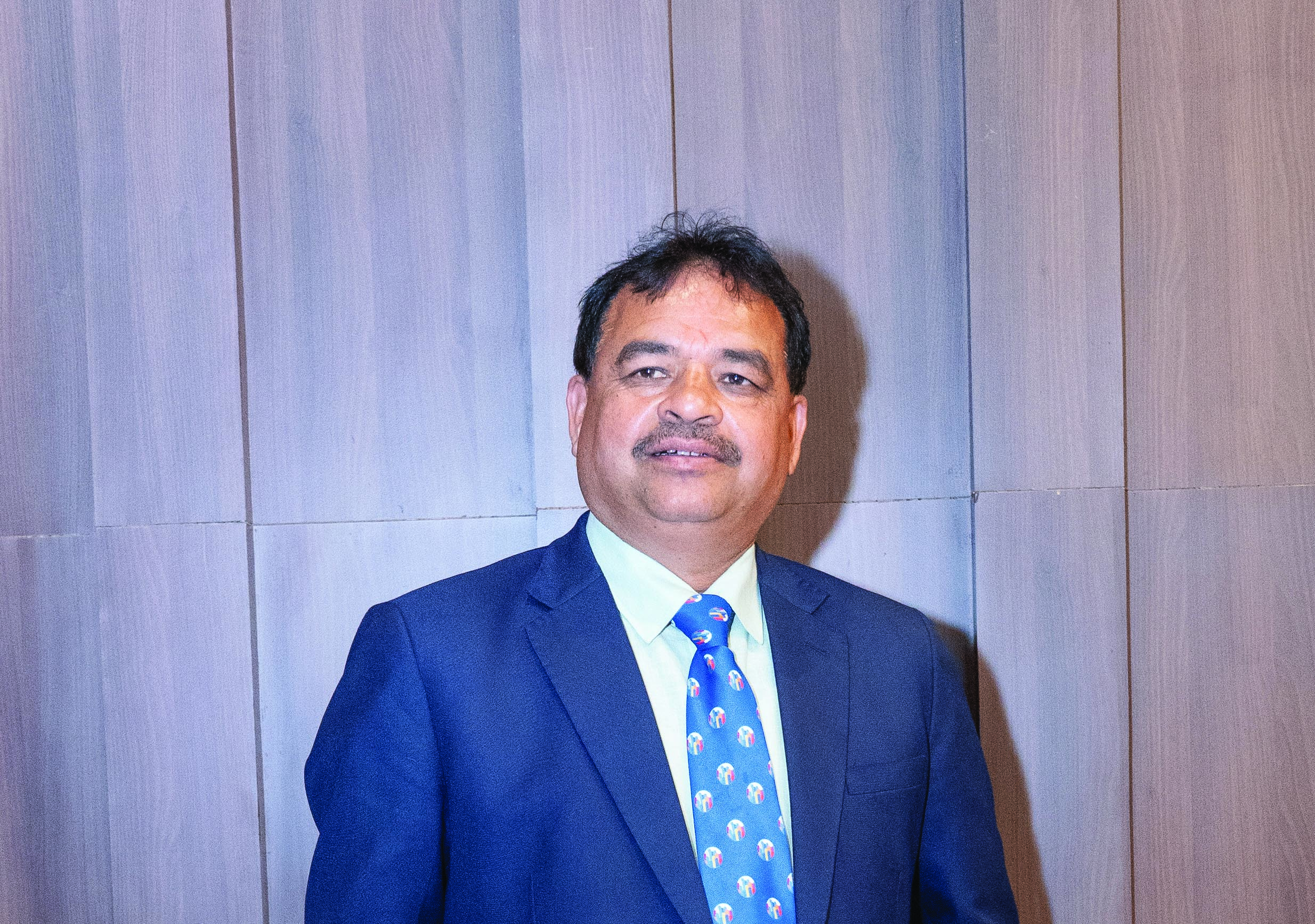
Krishna Prasad Adhikari
President
PABSON
Building an Education System that Keeps Our Students in Nepal
- College Readers
- 18 Feb 2026
- Views
- Interviews , Op-ed
Excerpts: Numerous young Nepalis embark on higher education abroad not solely due to facile visa acquisition but as a consequence of pervasive deficiencies within Nepal’s tertiary educational infrastructure. While private schooling up to grade 12 is generally efficacious, the advent of higher education unveils systemic inadequacies: erratic pedagogy, disjointed academic calendars, truncated curricula, protracted examinations, and delayed result dissemination collectively impede scholastic advancement. Moreover, the paucity of an English-medium milieu further circumscribes students’ global competitiveness. Nepali institutions concomitantly stifle nascent autonomy, affording scant opportunities for part-time employment, thereby impeding the development of self-sufficiency—an attribute cultivated assiduously by peers studying abroad.
Post-graduation, aspirants confront a paucity of viable vocational avenues, abysmally remunerated positions, and deleterious working conditions, particularly in exigent professions such as medicine and nursing. These vicissitudes compel many to pursue graduate studies overseas. Despite Nepal’s economic penury, its latent potential is prodigious, epitomized by rapid urban proliferations over recent decades.
Mitigating these maladies necessitates a paradigmatic overhaul encompassing erudite instructors, scrupulous administration, punctual academic operations, praxis-oriented curricula, and a robust nexus between academia and pragmatic exigencies. Educational entities must foment experiential learning, mentorship, and environments conducive to intellectual and personal fecundity. Through systemic reform and enhanced linkage with tangible opportunities, Nepal can obviate braindrain, empower its youth, and actualize its considerable developmental promise.
Whenever I am asked why so many young Nepalis go abroad for higher studies, I take a deep breath—because the answer is layered and complex. It is not simply because they secure visas. The reality is that from nursery to grade 12, most children who study in private schools progress happily. Parents pay the fees, students learn well, and everyone feels a sense of achievement. But after that milestone, problems begin.
When students move into higher education, they encounter gaps that discourage them from staying. Teaching is not timely. Academic calendars are rarely followed. Courses are incomplete, examinations delayed, and results often come late. Many classes are not conducted in proper English-medium settings, which puts students at a disadvantage in a globalized world. Most importantly, young people have little clarity about what opportunities exist in Nepal once they graduate.
A Culture of Dependence
By the time a student reaches 21 or 22 years of age, after years in school, one would expect them to be independent and capable of making life decisions. Yet in Nepal, many still rely on their parents for everything—from buying a motorcycle to covering daily expenses. Colleges here do not allow students even limited part-time work. I heard of one exceptional case in Bhaktapur where a student was permitted to work 20 hours a week, but that remains the rare exception.
In contrast, those who go abroad after grade 9 or 10 learn independence early. They work, earn, pay rent, and manage their lives. They experience the dignity of self-reliance. That is one of the biggest differences between staying in Nepal and going overseas. Our students do not just seek education abroad; they seek life skills and independence that our system fails to provide.
The Weakness of Higher Education
Even when students complete their degrees in Nepal, opportunities remain limited. Very few universities provide clear pathways to meaningful employment. This is why so many graduates feel compelled to go abroad for master’s degrees.
The solution lies in strengthening the fundamentals: trained teachers, accountable management, timely academic calendars, systematic examinations, and on-time results. Students in professional fields like medicine or engineering need to see real opportunities ahead of them—opportunities that match their hard work and financial investment. Without this, they will continue to leave.
Take the example of nurses or doctors. A nurse who earns a stipend of 12,000 rupees after years of study is hardly motivated to stay. A doctor earning 25,000–40,000 rupees struggles after investing enormous sums in their education. Unless salaries and working environments are improved, we cannot expect young professionals to remain in Nepal.
Nepal’s Untapped Potential
I do not want to paint only a bleak picture. Nepal is one of the poorest countries in terms of income, but it is one of the richest in potential. I have seen areas where, just 20 or 30 years ago, there were no houses. Today, those same areas are filled with homes worth millions. This shows that Nepal is a land of opportunity if we approach it positively.
To harness this potential, we must improve our educational environment, update teaching methods, and provide motivation and benefits for both students and parents. If we fail, the migration trend will not only continue but also deepen, accompanied by negative practices and cultural decline.
PABSON’s Role
At PABSON, we are not just observing these issues—we are addressing them. We have resolved to guide our schools toward a future where students feel confident staying in Nepal. I want to clarify a common misconception: many of the students going abroad are not from private schools but from government institutions.
That said, even within private education, we must improve. I have visited excellent schools such as Gyanadeh in Kathmandu and Kalika in Butwal, each with nearly 8,000 students. Managing such large numbers is no small feat. But the size of a school does not guarantee quality. What matters is progressive education: trained teachers, skills-based curricula, technology integration, and above all, a connection between education and real life.
Linking Education to Life Skills
One of our biggest failures is that universities remain disconnected from practical application. Abroad, even Nepalese-run universities conduct systematic examinations and emphasize practical learning. Here, traditional teaching dominates, and students are rarely challenged to apply what they learn.
Imagine if our engineering students working on hydropower projects conducted real research—whether building a pipeline or a tunnel would generate more electricity. Imagine bachelor’s students diving into hands-on projects instead of memorizing textbooks. This is the kind of education that creates thinkers and innovators.
We need trained teachers, modern classrooms, libraries, laboratories, safe boarding facilities, and interactive learning spaces. Students should enjoy being in college, with opportunities for part-time work and exposure to real-world projects. Senior students should mentor juniors. Administrators must be professional, and examinations must test understanding, not rote memory. Even primary and pre-primary students should get glimpses of universities to nurture curiosity and confidence from an early age.
The Way Forward
If we are to retain students in Nepal, higher education must be reimagined. Schools and universities must work together to provide seamless learning experiences, clear career pathways, and exposure to real-life opportunities. Students must feel that staying in Nepal equips them with not just degrees, but skills, independence, and dignity.
I firmly believe this is possible. Many colleges and IT institutes are already emerging as models of practical education, where students gain hands-on experience and even earn while learning. By scaling such efforts, we can ensure our students are not forced to look abroad for fulfillment.
Nepal is not a country without prospects. It is a country waiting for its education system to unlock them. With vision, commitment, and systematic reform, we can build an education environment where young Nepalis thrive, stay, and contribute to national development.
Popular Categories
Trending This Month








 Established in 2065 BS, COLLEGE READERS is a premier national-level educational magazine dedicated to serving the academic and informational needs of school and university students, teachers, educators, and concerned ones in Nepal. The magazine provides current and comprehensive information on various educational opportunities worldwide, aiming to guide school and college-level students in their academic and career journeys. It also highlights essential support services and service providers that play a crucial role in shaping students' career paths in today's competitive world.

- Our Location Putalisadak, Kathmandu
- Send Us Email collegereaders123@gmail.com
- Call Us Now 977 01 4518759
